


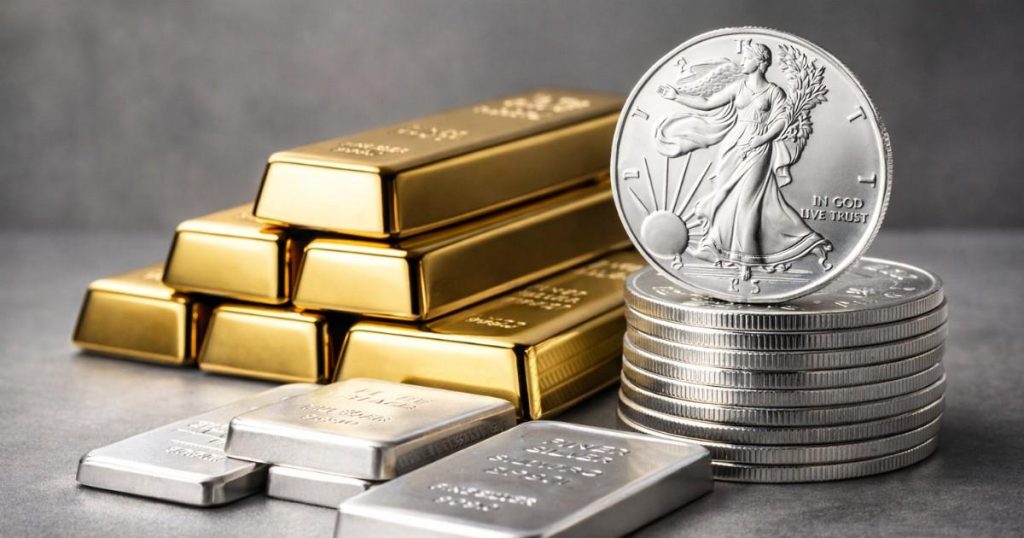


Gold silver price trends are once again at the center of market discussions as investors react to global economic uncertainty, inflation signals, and changing interest rate expectations. Precious metals have historically acted as financial shelters during unstable periods, and recent movements indicate that gold and silver are reclaiming their importance in both retail and institutional portfolios.
While price fluctuations are common, the broader direction of gold silver price movements reflects deeper macroeconomic forces. From central bank policies to geopolitical developments, several factors are shaping how these metals perform in today’s market.
Why Gold Silver Price Movements Matter
Gold silver price changes are often viewed as early indicators of economic stress or confidence. When stock markets become volatile or currencies weaken, investors typically turn toward tangible assets that preserve value over time.
Gold is widely regarded as a long-term store of wealth, while silver plays a dual role as both an investment asset and an industrial metal. This combination makes tracking gold silver price movements essential for understanding overall market sentiment.
Key Drivers Behind Gold Price Trends
Economic Uncertainty and Market Volatility
Gold prices tend to rise during periods of global uncertainty. Concerns around economic slowdowns, banking sector stress, and geopolitical tensions often increase demand for gold as a safe-haven asset.
Interest Rate Outlook
Interest rates play a major role in determining gold price direction. Since gold does not generate interest, higher rates can reduce its appeal. However, when markets expect rate cuts or pauses, gold often gains momentum as opportunity costs decline.
Currency Movements
Gold is priced globally in US dollars. A weaker dollar usually supports higher gold prices by making the metal cheaper for international buyers. Conversely, a stronger dollar can apply downward pressure on gold.
Central Bank Demand
Central banks across the world continue to increase gold reserves to diversify away from currency risk. This steady institutional demand provides long-term stability to gold price trends.
Silver Price Factors: More Than Just a Safe Haven
Silver prices behave differently from gold due to their strong industrial demand.
Industrial Usage
Silver is widely used in electronics, solar panels, electric vehicles, and medical equipment. Growth in renewable energy and technology sectors has boosted long-term silver demand, directly influencing silver price trends.
Economic Growth Sensitivity
Unlike gold, silver prices often rise during economic recovery phases due to increased manufacturing activity. This makes silver more volatile but also more rewarding during growth cycles.
Supply-Side Challenges
Mining output and production costs affect silver supply. Any disruption in mining operations or rising extraction costs can quickly reflect in silver price movements.
Gold vs Silver: Understanding the Difference
While both metals are considered safe-haven assets, they serve different investment purposes.
- Gold is relatively stable and preferred for long-term wealth preservation
- Silver experiences higher volatility and attracts active traders
- Gold reacts strongly to monetary policy changes
- Silver responds to industrial demand and economic expansion
Because of these differences, many investors choose to hold both metals to balance risk and reward.
Inflation’s Impact on Gold Silver Price
Inflation remains one of the strongest drivers of gold silver price trends. When inflation rises, the purchasing power of money decreases, encouraging investors to move toward assets that retain intrinsic value.
Gold has traditionally been viewed as a hedge against inflation, while silver benefits both from inflation protection and rising industrial usage. Even expectations of future inflation can push gold and silver prices higher.
Retail and Jewellery Demand Influence
In countries like India, jewellery demand plays a major role in shaping domestic gold silver price trends. Festivals, weddings, and seasonal buying can significantly increase demand, sometimes pushing local prices higher even when global markets remain stable.
Retail investment through digital platforms has also grown, allowing more individuals to track and invest in gold and silver through exchange-traded products and digital gold offerings.
Geopolitical Events and Their Effect
Geopolitical developments often trigger sharp short-term movements in gold silver price charts. Conflicts, trade tensions, and political instability generally increase demand for safe-haven assets.
Even uncertainty around elections or major policy changes can cause investors to seek refuge in precious metals, boosting gold and silver prices temporarily.
How Analysts View the Outlook
Market analysts suggest that gold silver price trends may remain volatile in the near term due to mixed economic signals. However, long-term fundamentals such as sustained inflation concerns, central bank accumulation, and industrial demand continue to support precious metals.
Some experts believe that precious metals could remain resilient even if equity markets stabilize, as diversification and risk management remain key priorities for investors.
How Investors Are Using Gold and Silver Today
Modern investors use gold and silver in multiple ways:
- Portfolio diversification
- Inflation protection
- Hedge against currency depreciation
- Long-term wealth preservation
Tracking gold silver price movements helps investors decide entry and exit points while maintaining a balanced asset allocation.
What to Watch Going Forward
Several factors will continue to influence gold silver price trends in the coming months:
- Central bank interest rate decisions
- Inflation data releases
- Global economic growth indicators
- Industrial demand for silver
- Currency market movements
Staying updated on these developments can help investors better understand price fluctuations and make informed decisions.
Staying Prepared in a Dynamic Market
Gold silver price trends highlight the importance of preparedness in an ever-changing financial landscape. While short-term volatility is unavoidable, precious metals continue to play a crucial role in risk management strategies.
By monitoring economic indicators and maintaining a long-term perspective, investors can navigate gold and silver markets more effectively and use these assets to strengthen their financial resilience.
Also Read: 2026 Suzuki Gixxer 250 Price Revealed: Exciting Updates That Make It a Strong Buy
Follow us on google news: click here